
Med Kharbach
Gagnrýnið gervigreindarlæsi:
Kennum nemendum að hugsa, ekki bara að gefa fyrirmæli.
“The most important AI skill we can teach students isn't how to write a better prompt. It's knowing when the answer they got back isn't good enough.”
— Dr. Med Kharbach
Um fyrirlesturinn
Nemendur eru löngu byrjaðir að nota gervigreind en margir treysta henni gagnrýnislaust. Gagnrýnið gervigreindarlæsi snýst um miklu meira en tæknilega leikni; það snýst um að temja sér hugarfar sem gerir nemendur færa um að draga svör gervigreindar í efa, greina hlutdrægni og skilja hvernig þessi verkfæri vinna með tungumálið. Mikilvægast er þó að nemendur viti hvenær á að leggja tæknina til hliðar. Í þessu erindi sýnir Med Kharbach hvers vegna gagnrýnin hugsun er dýrmætasta „gervigreindarfærnin“ sem við getum kennt nemendum okkar og hvernig við innleiðum hana í skólastarf.
Gögn úr fyrirlestrinum
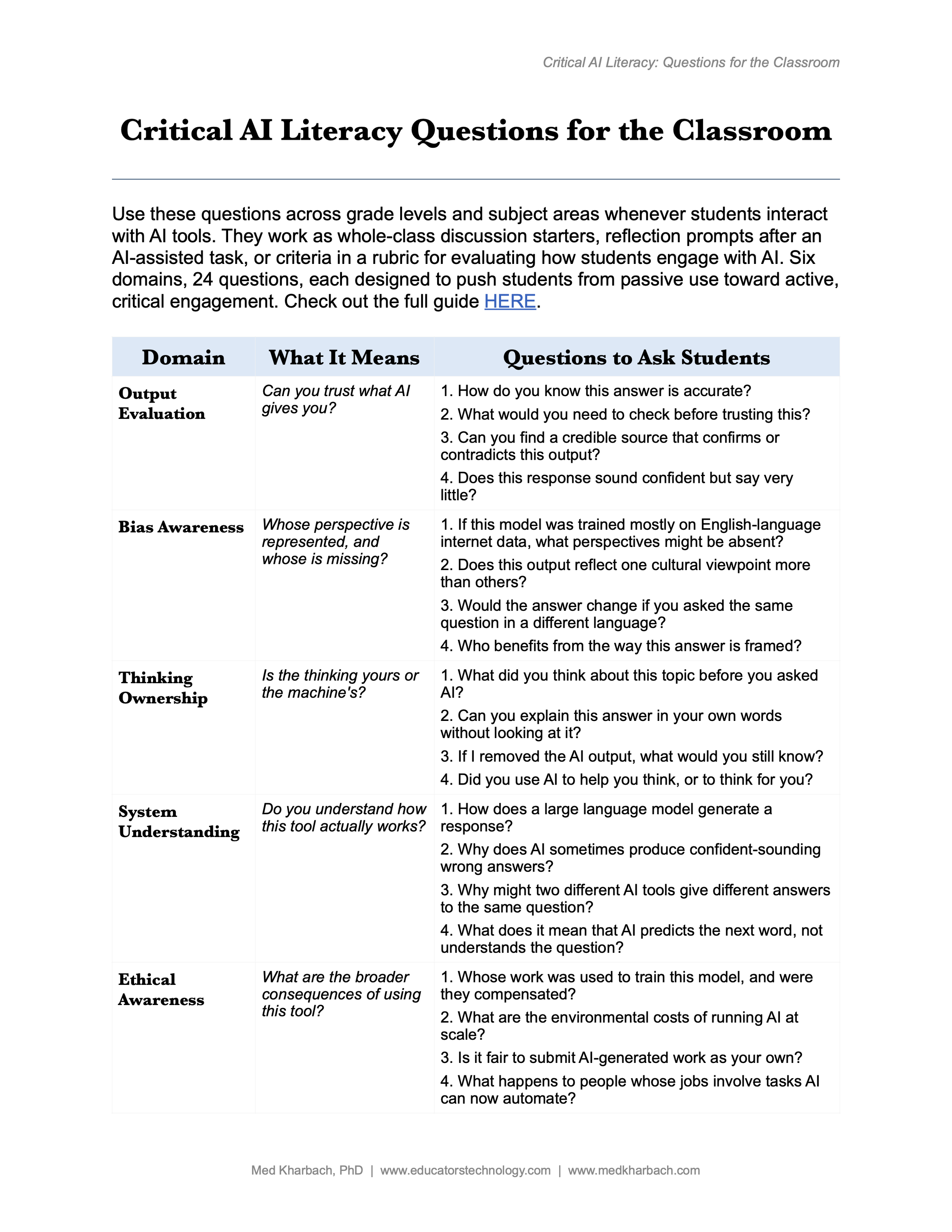
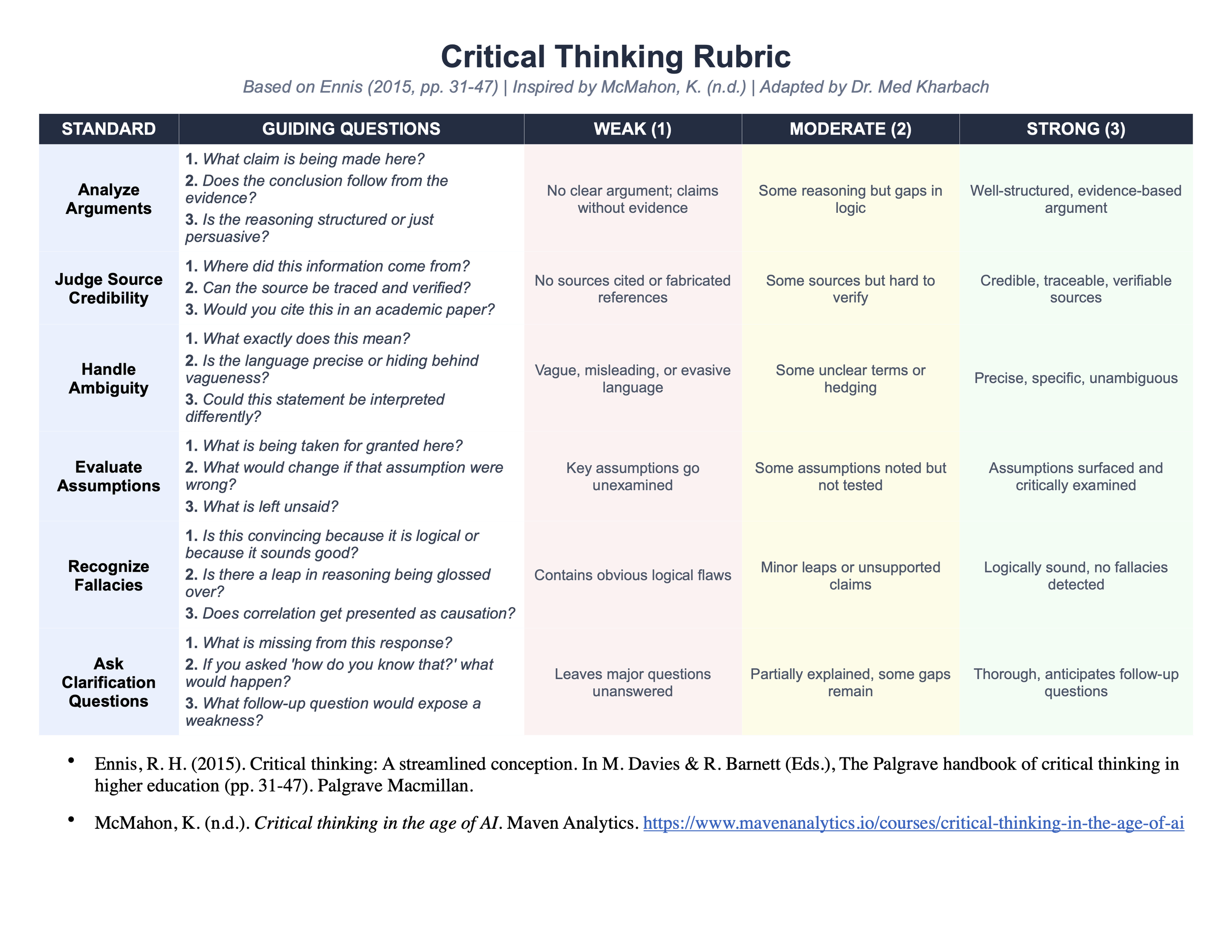
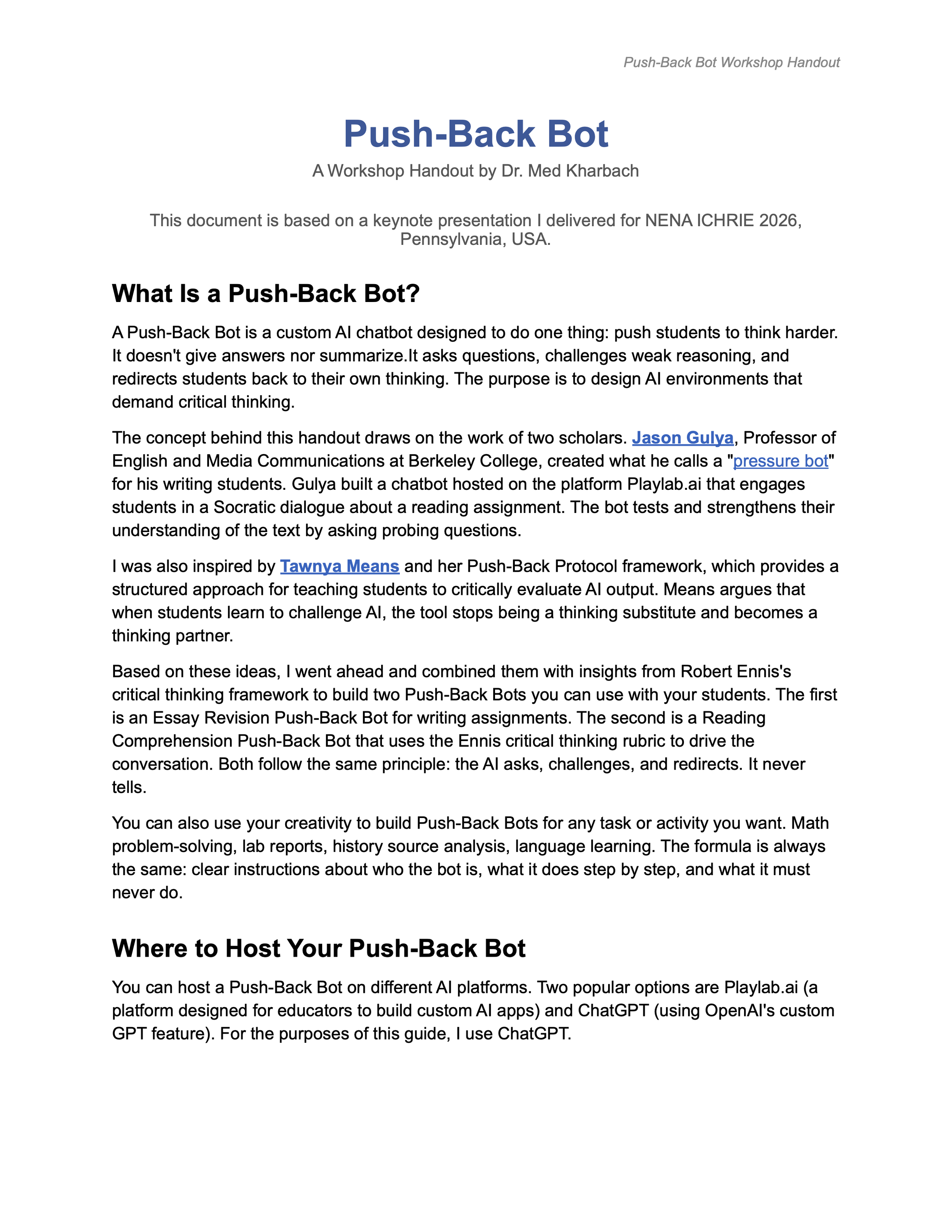
Hver er Med Kharbach?
Dr. Med Kharbach er rannsakandi, kennari og höfundur bókarinnar Teaching with AI. Hann býr yfir víðtækri reynslu úr skólastarfi, bæði sem fyrrverandi grunn- og framhaldsskólakennari, og kennir nú við Mount Saint Vincent University í Halifax í Kanada. Í gegnum vef sinn, EducatorsTechnology.com, og aðra miðla miðlar Med þekkingu sinni til hundruða þúsunda kennara um allan heim. Hann er þekktur fyrir hagnýtar greiningar á því hvernig gervigreind og stafræn tækni geta raunverulega bætt kennslu og nám. Med er ein skýrasta röddin á sviði gervigreindarlæsis í menntun, fræðimaður sem greinir tækifæri og áskoranir af yfirvegun og setur flókna tækni fram á mannamáli sem nýtist í daglegu skólastarfi.
Spurningar og svör frá Sli.Do
How can we tell whether a student has actually learned anything when AI has helped them with the work?
The work begins with the design of the assignment. Before deciding whether students can use AI, identify the competence you want them to demonstrate. Then ask how much AI assistance can be allowed before the tool begins to perform that competence for them.
For example, if students are learning to construct an evidence-based argument, AI might help them brainstorm possible topics, identify counterarguments, or suggest questions they should investigate. But if AI writes the argument, selects the evidence, and explains how the evidence supports the conclusion, it has performed much of the competence we intended to assess.
A useful question is: if we removed the student’s own knowledge and ability, could AI still produce work that meets the criteria? If the answer is yes, the assignment may no longer provide strong evidence of student learning.
We should also avoid relying on a single final product. If the submitted work is an essay, we can add another source of evidence, such as a short in-class explanation, a one-to-one check-in, an annotated draft, or a reflection in which the student explains the decisions they made and the AI suggestions they rejected. We might also ask the student to apply the same idea to a new example without AI.
The goal is to build a small chain of evidence. The final product shows what the student produced, while the additional evidence helps us see what the student understands and can do independently.
Could you give some examples of teaching methods or materials that train students to look critically at AI-generated content?
Yes. My guide, Critical Thinking Activities for the Age of AI, includes 13 hands-on activities that turn AI output into material for analysis.
One example is the Hallucination Detective activity. Students receive AI-generated content containing fabricated references, inaccurate statistics, or unsupported claims. They identify suspicious information and verify it using credible sources.
In the Push-Back Protocol, students examine an AI response, identify its main claims, request evidence, question its assumptions, and ask what perspectives or exceptions are missing.
Another activity is the AI Output Audit. Students use a rubric to evaluate an AI-generated response for argument quality, source credibility, hidden assumptions, ambiguity, and faulty reasoning. They score it individually and then compare their judgements with classmates.
The guide also includes a Human versus AI Blind Comparison, a Google versus ChatGPT comparison, a text-annotation exercise, an AI debate, and a “Funhouse Mirror” activity in which students examine how AI distorts or oversimplifies a subject they know well.
These activities develop habits such as checking evidence, recognizing assumptions, identifying omissions, and defending one’s evaluation. The guide is available here: Critical Thinking Activities for the Age of AI.
How can we teach students to evaluate and question what AI tells them, rather than taking everything it says as the truth?
We need to make questioning AI a regular classroom habit, rather than teaching it through one isolated lesson. Whenever AI appears in an activity, we should pause and ask students to examine what it produced.
We can model questions such as:
What are the main claims?
How do we know these claims are accurate?
What evidence supports them?
Can we locate and verify the references?
Are the statistics reported correctly?
What assumptions does the response make?
Which perspectives or contextual details are missing?
Does the conclusion follow from the evidence?
What would you change or reject, and why?
When an AI response includes a quotation, statistic, or academic reference, students should locate the original and verify it. They should compare important claims with credible websites, databases, assigned readings, or other authoritative sources.
It is also important for the teacher to model this process openly. Project an AI response, think aloud while examining it, and show students how you move from initial suspicion to verification. Over time, the sequence should become automatic: pause, identify the claim, check the evidence, and make your own judgement.
AI answers instantly, but learning depends on us wrestling with the problem ourselves. How much help is too much help? And how do we get AI to give its answers in smaller steps?
How much help is too much depends on the competence we want students to develop. AI assistance becomes excessive when it performs the thinking that the assignment is supposed to elicit from the learner.
If students are learning to solve a mathematical problem, asking AI to explain an unfamiliar term or provide a hint may support learning. Asking it to solve the complete problem and then copying the procedure removes the productive struggle.
Similarly, if students are learning to write an argument, AI might provide feedback on a student-created outline or raise a counterargument. It should not necessarily generate the thesis, organize the reasoning, select the evidence, and write the final response.
We can ask AI to function as a tutor. For example:
Do not give me the answer. Ask me one question at a time to help me work through the problem. Give me a hint only when I am stuck, and ask me to explain my reasoning before moving to the next step.
Another useful prompt is:
Break this task into stages. Show me only the first stage. Wait for my response, give feedback on my reasoning, and then provide the next stage. Do not complete the task for me.
Teachers can also build this structure into the assignment: begin with an independent attempt, allow limited AI feedback during revision, and finish with a short reflection or independent application. Productive AI support keeps the student making the important decisions and gradually reduces assistance as competence develops.
Don’t we, as professionals, need to learn how to work with AI ourselves before we can build students’ AI literacy? What are the best ways for a staff group to train themselves in this?
I agree. If teachers have not had opportunities to develop their own AI literacy, we cannot expect them to guide students confidently or critically. Teachers do not need to become technical experts, but they do need experience using AI, evaluating its output, understanding its limitations, protecting student information, and deciding when its use supports or undermines learning.
For staff professional learning, I would begin with actual teaching practices. Staff members could bring one assignment or lesson and examine where AI might help, where it might take over the intended learning, and what boundaries should be communicated to students.
A useful staff-learning sequence might include:
Experimenting with an approved AI tool using a familiar teaching task.
Comparing the output with teachers’ professional knowledge.
Identifying errors, bias, omissions, and fabricated information.
Redesigning an existing assignment with clear AI boundaries.
Trying the redesigned activity and sharing the results with colleagues.
Staff groups can also work through activities such as the Push-Back Protocol or Hallucination Detective themselves before adapting them for students. The most effective professional learning is usually collaborative, subject-specific, and sustained over time. Teachers need opportunities to try something, reflect on what happened, and revise their approach with colleagues.
I have collected several free guides for this purpose. They are available on my AI Literacy Guides page.